Development Log # 4: Low Speed Barriers Improved through Capability
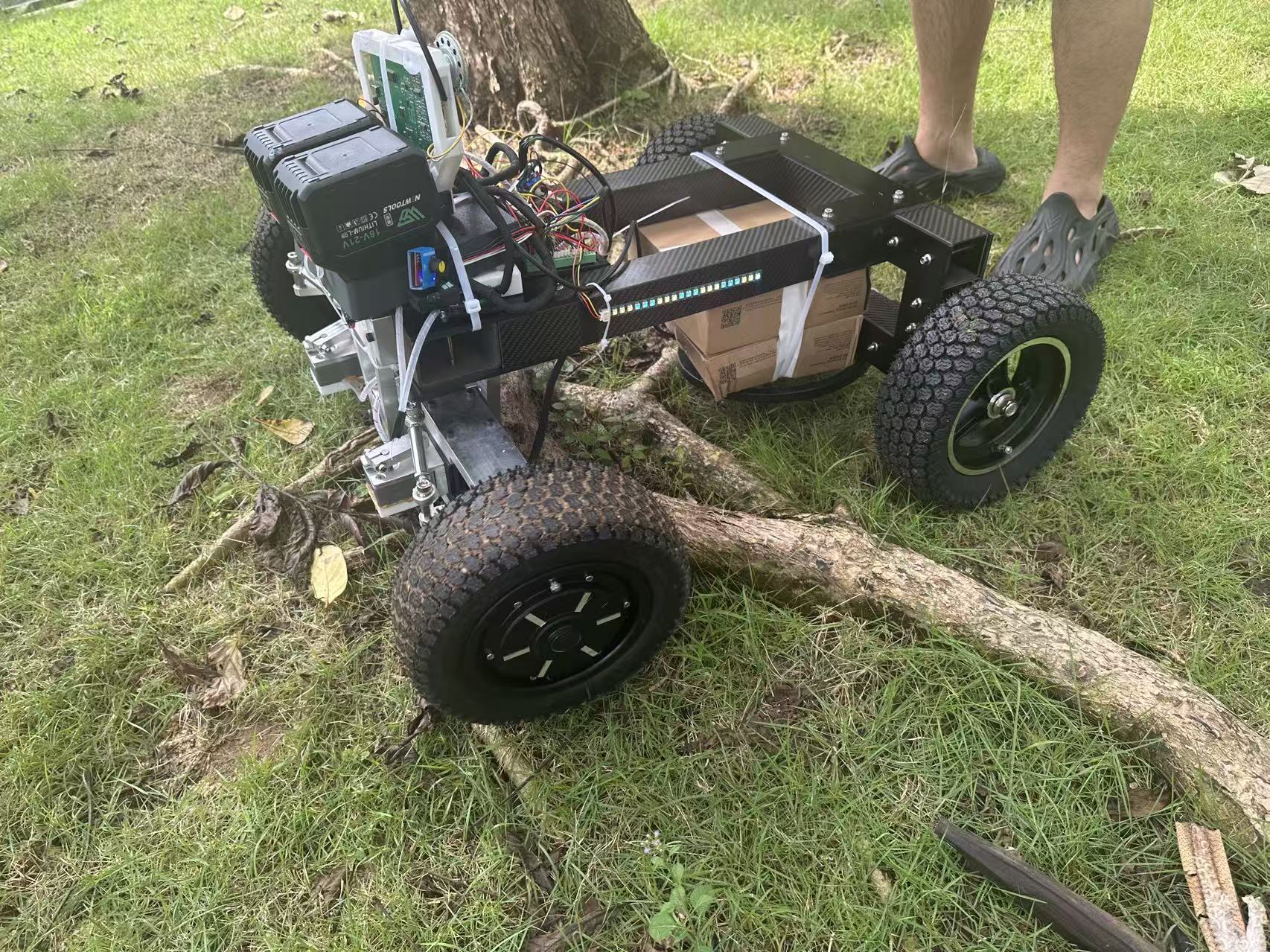
Having solved the problem of metal detection interference, we turned our attention to a new problem that emerged in low-speed tests: the rover struggled to overcome obstacles when moving slowly. This journal records our findings and remediation efforts.
Observed problems
In controlled tests on uneven terrain, the Gen2 prototype performed well at moderate speeds, but struggled slowly over rocks, roots and small slopes. At low speeds, the rover sometimes loses power and is unable to climb obstacles that are supposed to be within its capabilities. This is a concern because precise, slow movement is essential for a full scan.
The investigation found
We investigated two possible reasons: power output and control algorithms. In terms of power, we found that the motor's output torque at low RPM was not enough to maintain traction on rolling ground. On the algorithmic side, the speed control ring is too conservative at low speeds, causing a delay in accelerator response when the rover encounters resistance.
Measures for improvement
We made adjustments in two areas. First, the motor drive parameters were recalibrated to provide a more consistent torque output in the full speed range, especially at low speeds. Second, the speed control algorithm was updated to respond more quickly to sudden load changes, and a specific low-speed compensation curve was added to prevent deceleration on slopes or obstacles.
Result
Now rovers are more reliable when dealing with obstacles at low speeds. In repeated tests on mixed terrain, it was able to climb small rocks and uneven ground without losing speed or straying from its established path. This improvement is particularly pronounced when slow scans pass, where stability and accuracy are the things that are most valued.
Follow-up plans
With this issue resolved, the Gen2 prototype is ready for its first full outdoor field test. We will evaluate the full system – including mobility, detection and data recording capabilities – to operate in conditions as close to a real treasure hunt as possible. When the test is complete, we will share the results here.
Follow the build as it happens.
Early testers run the prototype on their own terrain and get first access to results. If you would rather back the build, the support page explains where the money goes.